
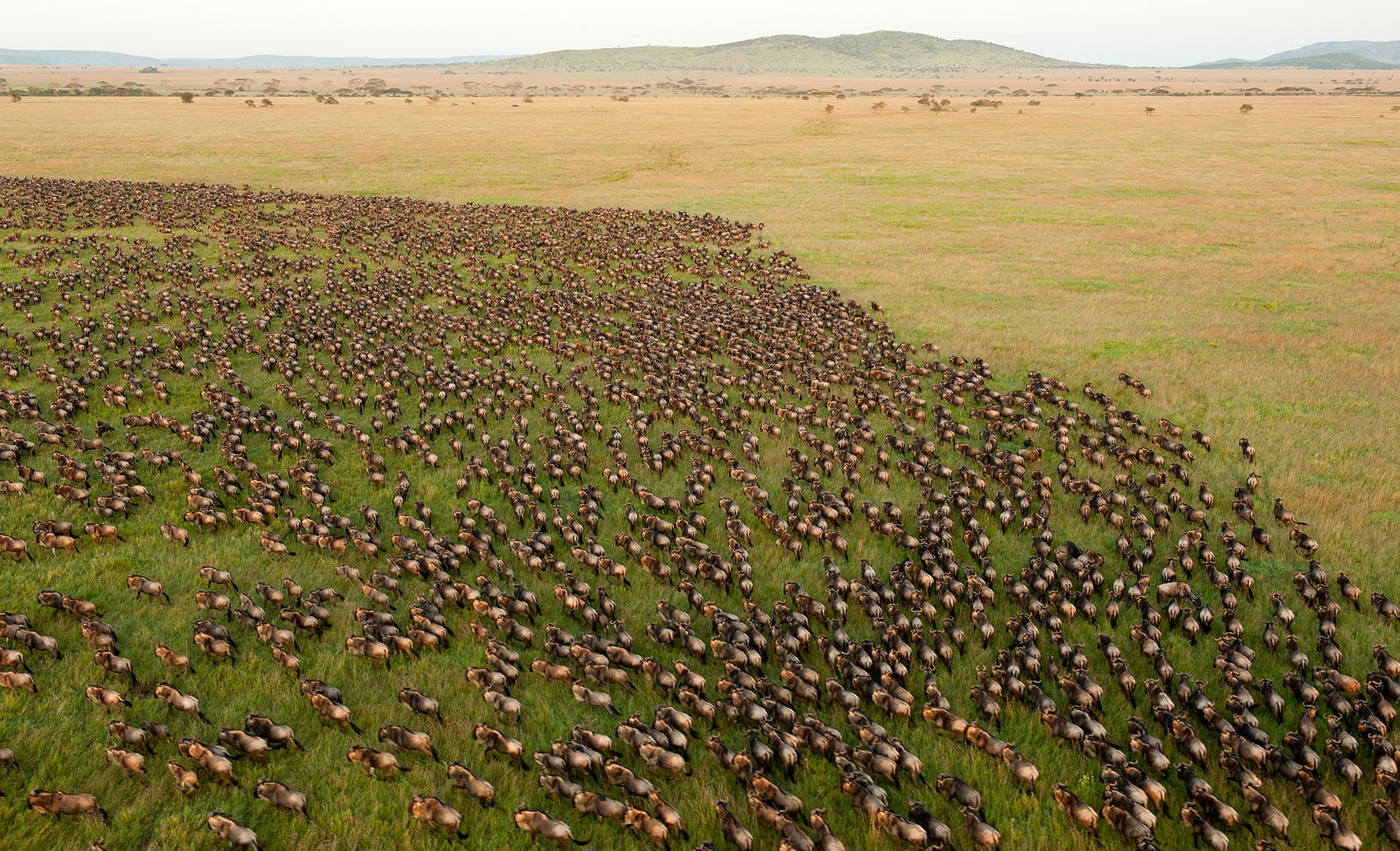
Every year, without fail, more than two million wildebeest, zebra, and gazelle move in a vast, continuous loop across the Serengeti-Mara ecosystem. It is the largest overland migration of large mammals left on the planet, and it raises an obvious question: what actually drives this many animals to keep moving, year after year, across the same 800-kilometer route?
The short answer is rain. The longer answer involves survival instinct, grass chemistry, predator pressure, and millions of years of evolutionary fine-tuning. Here’s what’s really behind the Serengeti wildebeest migration — and when and where to see it for yourself.
The Real Driver: Rainfall, Not Instinct Alone
Wildebeest don’t migrate because of some fixed internal calendar. They migrate because they are chasing rainfall, and with it, fresh grass. As storms move across East Africa, they green different parts of the Serengeti-Mara ecosystem at different times of year. Wildebeest can sense distant rainfall — likely through smell and visual cues like storm clouds — and the herds shift direction to follow it.
This is why the migration route isn’t perfectly fixed. It bends and stretches slightly each year depending on where the rain actually falls, which is one reason working with a safari operator who tracks the herds in real time matters so much for travel planning.
 Suggested photo: dramatic sky/storm shot over open plains. Alt text: “Rain clouds over the Serengeti signal the start of fresh grazing for migrating herds.”
Why Grass Quality Matters More Than Grass Quantity
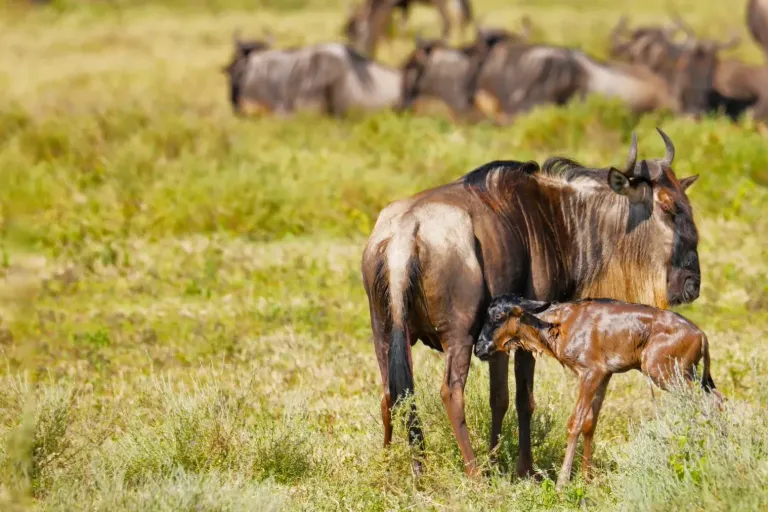
Not all grass is equal. The short grass plains of the southern Serengeti, especially around Ndutu, sit on volcanic soil from the nearby Ngorongoro highlands. That soil is unusually rich in minerals like calcium and phosphorus — exactly what pregnant and nursing wildebeest need. This is why the herds gather there specifically between December and March to give birth, timing calving season so nearly 500,000 calves are born within a few short weeks.
Once that short grass is grazed down and the dry season sets in, the herds move toward taller grasslands further north and west, where moisture lingers longer even without rain.

Safety in Overwhelming Numbers
Predator pressure is the second major force shaping the migration. Lion, leopard, cheetah, hyena, and crocodile all feed on migrating animals, but a herd of over a million overwhelms even the most efficient predators. This strategy, known as predator swamping, means that while individual animals are at constant risk, the herd as a whole survives largely intact. It’s also part of why the herds move together rather than scattering — there is real safety in the crowd.
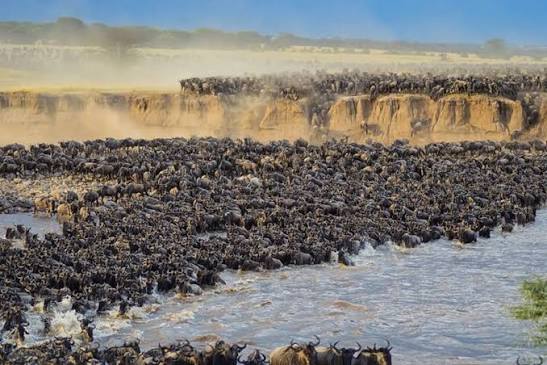
Wildebeest herd crossing the Mara River during the Great Migration, northern Serengeti.”
The Migration Route, Season by Season
(See the seasonal timeline graphic above for a visual summary of this route.)
- December–March (Southern Serengeti, Ndutu): Calving season on mineral-rich short grass plains.
- April–May (Central Serengeti): The herds begin moving north as the plains dry out.
- June–July (Grumeti River): Crossings begin, with Nile crocodiles waiting in the shallows.
- July–September (Northern Serengeti, Mara River): The most dramatic river crossings of the year, as herds push into Kenya’s Masai Mara.
- October–November (Southward return): Short rains trigger the journey back toward the southern plains.
Because the cycle never fully stops, there is no single “right” month to see the migration — only the right location for the experience you’re after, whether that’s the raw drama of a river crossing or the tender chaos of calving season.
Why This Matters for Your Safari Planning
Understanding what drives the migration is the difference between guessing and knowing where to be. A safari booked for the Mara River crossings in February, for example, will miss them entirely, since the herds are hundreds of kilometers south at that time of year. An experienced local operator who monitors rainfall patterns and herd movement can place you in the right spot at the right time, rather than relying on generic seasonal guides.
 Suggested photo: safari vehicle/guide shot at golden hour. Alt text: “Safari guests watching the Great Migration from a vehicle in the Serengeti at sunset.”
The Bigger Picture
At its core, the Serengeti migration is a finely tuned response to an unpredictable environment — proof that even in a landscape shaped by rainfall and risk, life finds a rhythm it can rely on. For travelers, understanding that rhythm is the first step toward witnessing one of the most extraordinary wildlife events on Earth.